Keep up to date with our latest news updates from Grenville Engineering
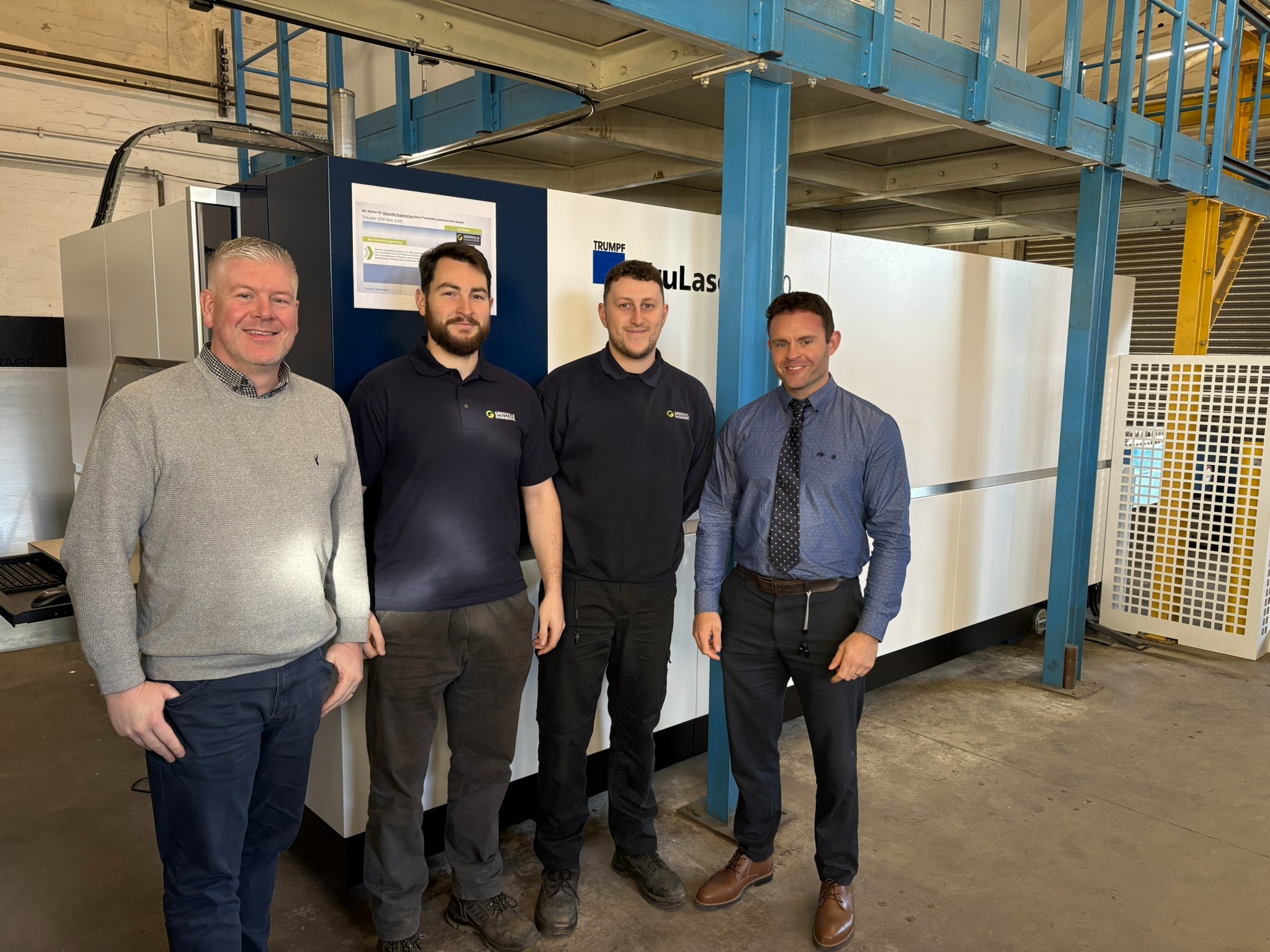
Grenville Engineering is entering a new era of capability with the arrival of its latest investment: the 12kW TRUMPF TruLaser 3030 fiber (L95), delivered on 7 November 2025. This state-of-the-art system strengthens our already extensive laser cutting department and reinforces our commitment to delivering high-quality, UK-based fabrication solutions.
But what does this new technology mean for our customers—and how does laser cutting continue to shape modern manufacturing? Let’s take a closer look.
[/et_pb_column]
Laser cutting is a highly precise manufacturing process that uses a focused beam of light to cut or engrave materials. By directing an intense point of heat—generated by CO₂ or fibre-laser technology—the machine can produce intricate shapes, clean edges and fine detail that would be impossible to achieve by hand or with many traditional cutting tools.
At Grenville Engineering, our laser technology works across a range of materials including stainless steel, mild steel, aluminium, copper and brass, delivering a polished, accurate finish every time.
[/et_pb_column]
How Does the Process Work?
The process begins with a CAD file, which guides the machine through every cut. The concentrated laser beam melts or vaporises the material exactly along the programmed path, leaving a clean, smooth edge.
Laser cutting is not only extremely accurate—it’s also energy-efficient, fast and consistent, making it one of the most effective manufacturing methods available in the UK today.
[/et_pb_column]
What Can Laser Cutting Be Used For?
Laser cutting is an essential process for industries requiring high levels of precision, detail and repeatability. These include:
-
Automotive
-
Food processing and packaging
-
Aerospace
-
Electronics and instrumentation
-
Earthmoving and heavy equipment manufacturing
Grenville Engineering supports many high-profile partners, producing over 1,000 different components, from tiny 3.5mm parts to larger pieces within our cutting area of 3.5m x 1.5m. Our laser machines can pierce single or multiple layers with remarkable accuracy, producing components that serve critical roles in some of the UK’s most demanding applications.
[/et_pb_column]
Who Benefits from Laser Cutting?
Laser cutting is the first vital step in many manufacturing processes. Whether producing prototypes, intricate brackets, safety-critical components or bespoke designs, laser cutting ensures the accuracy needed for downstream operations.
Our customers rely on us for:
Compared with plasma cutting, laser cutting offers far higher precision, a smaller kerf and the ability to work with thinner sheets without compromising quality. This makes it the perfect solution for OEMs, R&D teams, product designers and manufacturers across sectors.
[/et_pb_column]
The Benefits of Modern Laser Cutting
The advantages of laser cutting are clear:
-
Precision and reliability – control over heat and duration creates flawless edges.
-
Non-contact processing – eliminates tool wear and reduces the risk of damage.
-
Speed and cost-efficiency – low maintenance and fast cutting cycles.
-
Enhanced safety – enclosed beams protect operators and maintain clean working conditions.
The combination of speed, accuracy and versatility makes laser cutting one of the most efficient manufacturing technologies available today.
[/et_pb_column]
Introducing the New 12kW TRUMPF TruLaser 3030 Fiber
[/et_pb_column]
Grenville Engineering’s latest acquisition represents a significant upgrade in both power and capability. The TruLaser 3030 fiber offers:
Advanced Technical Features
-
3000 x 1500 mm working range
-
TRUMPF’s TruDisk 12001 solid-state laser with BrightLine fiber for superb edge quality, even at high power
-
Automatic nozzle changer to switch seamlessly between cutting conditions
-
Highspeed Eco package, reducing gas consumption while increasing feed rate
-
Compressed air cutting and an integrated gas mixer for exceptional flexibility
Cutting Power & Thickness Capability
With up to 12 kW of laser power, the machine can cut:
This significantly expands the range of materials and thicknesses we can process in-house—reducing lead times, eliminating the need for outsourcing and increasing production efficiency for our customers.
Keep up to date with our latest news updates from Grenville Engineering
Grenville Engineering is entering a new era of capability with the arrival of its latest investment: the 12kW TRUMPF TruLaser 3030 fiber (L95), delivered on 7 November 2025. This state-of-the-art system strengthens our already extensive laser cutting department and reinforces our commitment to delivering high-quality, UK-based fabrication solutions.
But what does this new technology mean for our customers—and how does laser cutting continue to shape modern manufacturing? Let’s take a closer look.
[/et_pb_column]
Laser cutting is a highly precise manufacturing process that uses a focused beam of light to cut or engrave materials. By directing an intense point of heat—generated by CO₂ or fibre-laser technology—the machine can produce intricate shapes, clean edges and fine detail that would be impossible to achieve by hand or with many traditional cutting tools.
At Grenville Engineering, our laser technology works across a range of materials including stainless steel, mild steel, aluminium, copper and brass, delivering a polished, accurate finish every time.
[/et_pb_column]
The process begins with a CAD file, which guides the machine through every cut. The concentrated laser beam melts or vaporises the material exactly along the programmed path, leaving a clean, smooth edge.
Laser cutting is not only extremely accurate—it’s also energy-efficient, fast and consistent, making it one of the most effective manufacturing methods available in the UK today.
[/et_pb_column]
Laser cutting is an essential process for industries requiring high levels of precision, detail and repeatability. These include:
-
Automotive
-
Food processing and packaging
-
Aerospace
-
Electronics and instrumentation
-
Earthmoving and heavy equipment manufacturing
Grenville Engineering supports many high-profile partners, producing over 1,000 different components, from tiny 3.5mm parts to larger pieces within our cutting area of 3.5m x 1.5m. Our laser machines can pierce single or multiple layers with remarkable accuracy, producing components that serve critical roles in some of the UK’s most demanding applications.
[/et_pb_column]
Who Benefits from Laser Cutting?
Laser cutting is the first vital step in many manufacturing processes. Whether producing prototypes, intricate brackets, safety-critical components or bespoke designs, laser cutting ensures the accuracy needed for downstream operations.
Our customers rely on us for:
Compared with plasma cutting, laser cutting offers far higher precision, a smaller kerf and the ability to work with thinner sheets without compromising quality. This makes it the perfect solution for OEMs, R&D teams, product designers and manufacturers across sectors.
[/et_pb_column]
The advantages of laser cutting are clear:
-
Precision and reliability – control over heat and duration creates flawless edges.
-
Non-contact processing – eliminates tool wear and reduces the risk of damage.
-
Speed and cost-efficiency – low maintenance and fast cutting cycles.
-
Enhanced safety – enclosed beams protect operators and maintain clean working conditions.
The combination of speed, accuracy and versatility makes laser cutting one of the most efficient manufacturing technologies available today.
[/et_pb_column]
[/et_pb_column]
Laser cutting is a highly precise manufacturing process that uses a focused beam of light to cut or engrave materials. By directing an intense point of heat—generated by CO₂ or fibre-laser technology—the machine can produce intricate shapes, clean edges and fine detail that would be impossible to achieve by hand or with many traditional cutting tools.
At Grenville Engineering, our laser technology works across a range of materials including stainless steel, mild steel, aluminium, copper and brass, delivering a polished, accurate finish every time.
[/et_pb_column]
[/et_pb_column]
[/et_pb_column]
The process begins with a CAD file, which guides the machine through every cut. The concentrated laser beam melts or vaporises the material exactly along the programmed path, leaving a clean, smooth edge.
Laser cutting is not only extremely accurate—it’s also energy-efficient, fast and consistent, making it one of the most effective manufacturing methods available in the UK today.
[/et_pb_column]
[/et_pb_column]
Laser cutting is an essential process for industries requiring high levels of precision, detail and repeatability. These include:
-
Automotive
-
Food processing and packaging
-
Aerospace
-
Electronics and instrumentation
-
Earthmoving and heavy equipment manufacturing
Grenville Engineering supports many high-profile partners, producing over 1,000 different components, from tiny 3.5mm parts to larger pieces within our cutting area of 3.5m x 1.5m. Our laser machines can pierce single or multiple layers with remarkable accuracy, producing components that serve critical roles in some of the UK’s most demanding applications.
[/et_pb_column]
[/et_pb_column]
Laser cutting is the first vital step in many manufacturing processes. Whether producing prototypes, intricate brackets, safety-critical components or bespoke designs, laser cutting ensures the accuracy needed for downstream operations.
Our customers rely on us for:
Compared with plasma cutting, laser cutting offers far higher precision, a smaller kerf and the ability to work with thinner sheets without compromising quality. This makes it the perfect solution for OEMs, R&D teams, product designers and manufacturers across sectors.
[/et_pb_column]
[/et_pb_column]
[/et_pb_column]
The advantages of laser cutting are clear:
-
Precision and reliability – control over heat and duration creates flawless edges.
-
Non-contact processing – eliminates tool wear and reduces the risk of damage.
-
Speed and cost-efficiency – low maintenance and fast cutting cycles.
-
Enhanced safety – enclosed beams protect operators and maintain clean working conditions.
The combination of speed, accuracy and versatility makes laser cutting one of the most efficient manufacturing technologies available today.
[/et_pb_column]
[/et_pb_column]
[/et_pb_column]
Laser cutting is a highly precise manufacturing process that uses a focused beam of light to cut or engrave materials. By directing an intense point of heat—generated by CO₂ or fibre-laser technology—the machine can produce intricate shapes, clean edges and fine detail that would be impossible to achieve by hand or with many traditional cutting tools.
At Grenville Engineering, our laser technology works across a range of materials including stainless steel, mild steel, aluminium, copper and brass, delivering a polished, accurate finish every time.
[/et_pb_column]
[/et_pb_column]
The process begins with a CAD file, which guides the machine through every cut. The concentrated laser beam melts or vaporises the material exactly along the programmed path, leaving a clean, smooth edge.
Laser cutting is not only extremely accurate—it’s also energy-efficient, fast and consistent, making it one of the most effective manufacturing methods available in the UK today.
[/et_pb_column]
[/et_pb_column]
Laser cutting is an essential process for industries requiring high levels of precision, detail and repeatability. These include:
-
Automotive
-
Food processing and packaging
-
Aerospace
-
Electronics and instrumentation
-
Earthmoving and heavy equipment manufacturing
Grenville Engineering supports many high-profile partners, producing over 1,000 different components, from tiny 3.5mm parts to larger pieces within our cutting area of 3.5m x 1.5m. Our laser machines can pierce single or multiple layers with remarkable accuracy, producing components that serve critical roles in some of the UK’s most demanding applications.
[/et_pb_column]
[/et_pb_column]
[/et_pb_column]
Laser cutting is the first vital step in many manufacturing processes. Whether producing prototypes, intricate brackets, safety-critical components or bespoke designs, laser cutting ensures the accuracy needed for downstream operations.
Our customers rely on us for:
Compared with plasma cutting, laser cutting offers far higher precision, a smaller kerf and the ability to work with thinner sheets without compromising quality. This makes it the perfect solution for OEMs, R&D teams, product designers and manufacturers across sectors.
[/et_pb_column]
[/et_pb_column]
The advantages of laser cutting are clear:
-
Precision and reliability – control over heat and duration creates flawless edges.
-
Non-contact processing – eliminates tool wear and reduces the risk of damage.
-
Speed and cost-efficiency – low maintenance and fast cutting cycles.
-
Enhanced safety – enclosed beams protect operators and maintain clean working conditions.
The combination of speed, accuracy and versatility makes laser cutting one of the most efficient manufacturing technologies available today.
[/et_pb_column]
[/et_pb_column]
[/et_pb_column]
Laser cutting is a highly precise manufacturing process that uses a focused beam of light to cut or engrave materials. By directing an intense point of heat—generated by CO₂ or fibre-laser technology—the machine can produce intricate shapes, clean edges and fine detail that would be impossible to achieve by hand or with many traditional cutting tools.
At Grenville Engineering, our laser technology works across a range of materials including stainless steel, mild steel, aluminium, copper and brass, delivering a polished, accurate finish every time.
[/et_pb_column]
[/et_pb_column]
The process begins with a CAD file, which guides the machine through every cut. The concentrated laser beam melts or vaporises the material exactly along the programmed path, leaving a clean, smooth edge.
Laser cutting is not only extremely accurate—it’s also energy-efficient, fast and consistent, making it one of the most effective manufacturing methods available in the UK today.
[/et_pb_column]
[/et_pb_column]
Laser cutting is an essential process for industries requiring high levels of precision, detail and repeatability. These include:
-
Automotive
-
Food processing and packaging
-
Aerospace
-
Electronics and instrumentation
-
Earthmoving and heavy equipment manufacturing
Grenville Engineering supports many high-profile partners, producing over 1,000 different components, from tiny 3.5mm parts to larger pieces within our cutting area of 3.5m x 1.5m. Our laser machines can pierce single or multiple layers with remarkable accuracy, producing components that serve critical roles in some of the UK’s most demanding applications.
[/et_pb_column]
[/et_pb_column]
[/et_pb_column]
Laser cutting is the first vital step in many manufacturing processes. Whether producing prototypes, intricate brackets, safety-critical components or bespoke designs, laser cutting ensures the accuracy needed for downstream operations.
Our customers rely on us for:
Compared with plasma cutting, laser cutting offers far higher precision, a smaller kerf and the ability to work with thinner sheets without compromising quality. This makes it the perfect solution for OEMs, R&D teams, product designers and manufacturers across sectors.
[/et_pb_column]
[/et_pb_column]
The advantages of laser cutting are clear:
-
Precision and reliability – control over heat and duration creates flawless edges.
-
Non-contact processing – eliminates tool wear and reduces the risk of damage.
-
Speed and cost-efficiency – low maintenance and fast cutting cycles.
-
Enhanced safety – enclosed beams protect operators and maintain clean working conditions.
The combination of speed, accuracy and versatility makes laser cutting one of the most efficient manufacturing technologies available today.
[/et_pb_column]
[/et_pb_column]
Laser cutting is a highly precise manufacturing process that uses a focused beam of light to cut or engrave materials. By directing an intense point of heat—generated by CO₂ or fibre-laser technology—the machine can produce intricate shapes, clean edges and fine detail that would be impossible to achieve by hand or with many traditional cutting tools.
At Grenville Engineering, our laser technology works across a range of materials including stainless steel, mild steel, aluminium, copper and brass, delivering a polished, accurate finish every time.
[/et_pb_column]
How Does the Process Work?
The process begins with a CAD file, which guides the machine through every cut. The concentrated laser beam melts or vaporises the material exactly along the programmed path, leaving a clean, smooth edge.
Laser cutting is not only extremely accurate—it’s also energy-efficient, fast and consistent, making it one of the most effective manufacturing methods available in the UK today.
[/et_pb_column]
What Can Laser Cutting Be Used For?
Laser cutting is an essential process for industries requiring high levels of precision, detail and repeatability. These include:
-
Automotive
-
Food processing and packaging
-
Aerospace
-
Electronics and instrumentation
-
Earthmoving and heavy equipment manufacturing
Grenville Engineering supports many high-profile partners, producing over 1,000 different components, from tiny 3.5mm parts to larger pieces within our cutting area of 3.5m x 1.5m. Our laser machines can pierce single or multiple layers with remarkable accuracy, producing components that serve critical roles in some of the UK’s most demanding applications.
[/et_pb_column]
[/et_pb_column]
Laser cutting is the first vital step in many manufacturing processes. Whether producing prototypes, intricate brackets, safety-critical components or bespoke designs, laser cutting ensures the accuracy needed for downstream operations.
Our customers rely on us for:
Compared with plasma cutting, laser cutting offers far higher precision, a smaller kerf and the ability to work with thinner sheets without compromising quality. This makes it the perfect solution for OEMs, R&D teams, product designers and manufacturers across sectors.
[/et_pb_column]
The Benefits of Modern Laser Cutting
The advantages of laser cutting are clear:
-
Precision and reliability – control over heat and duration creates flawless edges.
-
Non-contact processing – eliminates tool wear and reduces the risk of damage.
-
Speed and cost-efficiency – low maintenance and fast cutting cycles.
-
Enhanced safety – enclosed beams protect operators and maintain clean working conditions.
The combination of speed, accuracy and versatility makes laser cutting one of the most efficient manufacturing technologies available today.
[/et_pb_column]
Introducing the New 12kW TRUMPF TruLaser 3030 Fiber
[/et_pb_column]
Grenville Engineering’s latest acquisition represents a significant upgrade in both power and capability. The TruLaser 3030 fiber offers:
Advanced Technical Features
-
3000 x 1500 mm working range
-
TRUMPF’s TruDisk 12001 solid-state laser with BrightLine fiber for superb edge quality, even at high power
-
Automatic nozzle changer to switch seamlessly between cutting conditions
-
Highspeed Eco package, reducing gas consumption while increasing feed rate
-
Compressed air cutting and an integrated gas mixer for exceptional flexibility
Cutting Power & Thickness Capability
With up to 12 kW of laser power, the machine can cut:
This significantly expands the range of materials and thicknesses we can process in-house—reducing lead times, eliminating the need for outsourcing and increasing production efficiency for our customers.
[/et_pb_column]
[/et_pb_column]
[/et_pb_column]
Laser cutting is a highly precise manufacturing process that uses a focused beam of light to cut or engrave materials. By directing an intense point of heat—generated by CO₂ or fibre-laser technology—the machine can produce intricate shapes, clean edges and fine detail that would be impossible to achieve by hand or with many traditional cutting tools.
At Grenville Engineering, our laser technology works across a range of materials including stainless steel, mild steel, aluminium, copper and brass, delivering a polished, accurate finish every time.
[/et_pb_column]
[/et_pb_column]
The process begins with a CAD file, which guides the machine through every cut. The concentrated laser beam melts or vaporises the material exactly along the programmed path, leaving a clean, smooth edge.
Laser cutting is not only extremely accurate—it’s also energy-efficient, fast and consistent, making it one of the most effective manufacturing methods available in the UK today.
[/et_pb_column]
[/et_pb_column]
Laser cutting is an essential process for industries requiring high levels of precision, detail and repeatability. These include:
-
Automotive
-
Food processing and packaging
-
Aerospace
-
Electronics and instrumentation
-
Earthmoving and heavy equipment manufacturing
Grenville Engineering supports many high-profile partners, producing over 1,000 different components, from tiny 3.5mm parts to larger pieces within our cutting area of 3.5m x 1.5m. Our laser machines can pierce single or multiple layers with remarkable accuracy, producing components that serve critical roles in some of the UK’s most demanding applications.
[/et_pb_column]
[/et_pb_column]
[/et_pb_column]
Laser cutting is the first vital step in many manufacturing processes. Whether producing prototypes, intricate brackets, safety-critical components or bespoke designs, laser cutting ensures the accuracy needed for downstream operations.
Our customers rely on us for:
Compared with plasma cutting, laser cutting offers far higher precision, a smaller kerf and the ability to work with thinner sheets without compromising quality. This makes it the perfect solution for OEMs, R&D teams, product designers and manufacturers across sectors.
[/et_pb_column]
[/et_pb_column]
The advantages of laser cutting are clear:
-
Precision and reliability – control over heat and duration creates flawless edges.
-
Non-contact processing – eliminates tool wear and reduces the risk of damage.
-
Speed and cost-efficiency – low maintenance and fast cutting cycles.
-
Enhanced safety – enclosed beams protect operators and maintain clean working conditions.
The combination of speed, accuracy and versatility makes laser cutting one of the most efficient manufacturing technologies available today.